I love basil, you might too. It’s fresh herby smell and taste in a salad or on pizza is one of the pleasures in life. Let’s face it, the basil from the supermarkets isn’t all that fresh and since it’s been cut, it’s on its way out. Unless you’re lucky enough to have access to potted basil in your supermarket.
That’s what I always try to have some growing in the garden or near the kitchen window. It grows quickly and you can just take a cutting and start again with a new plant. Here’s an easy method to grow basil in an up cycled plastic bottle, you’ll need a basil seed or two.
Prepare your bottle
Wash your plastic bottle so it’s fairly clean. I remove the label so it’s easier to see the root progress. Then cut the top off with scissors.
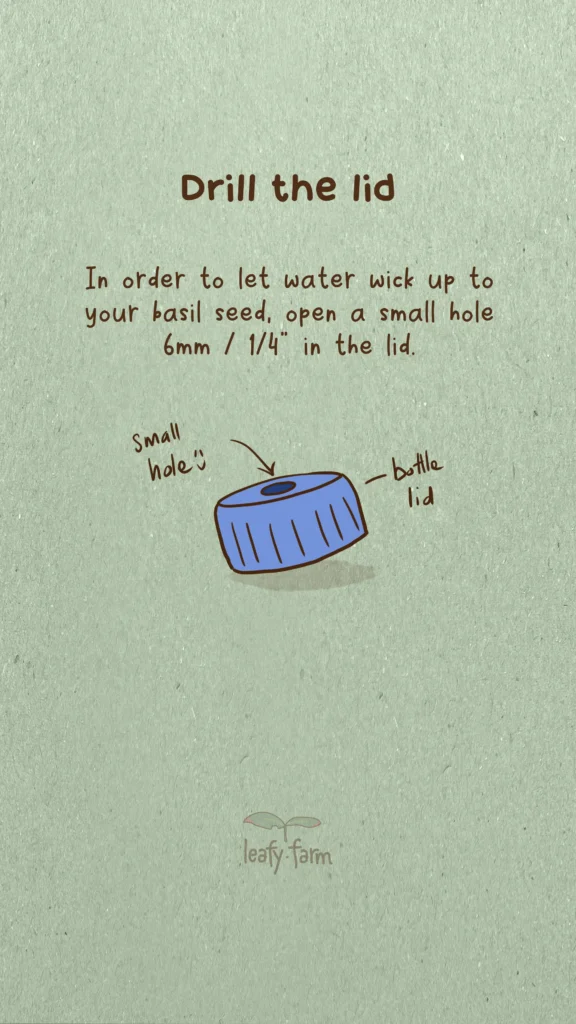
Drill the lid
Drill the lid with a 6mm / 1/4″ hole to allow water to seep into your growing medium.
Flip your lid
Flip the lid and place it upside down into your bottle. Use a sharpie or similar marker to mark halfway up the lid as your watermark.
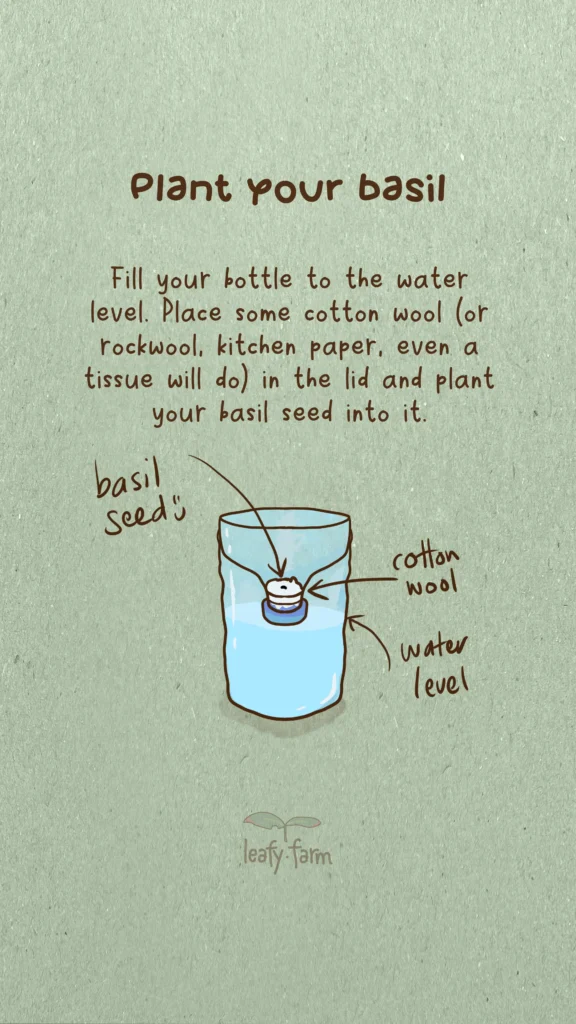
Plant your basil
Fill your bottle to the water mark and lace some cotton wool or kitchen paper into the lid and plant your basil seed into it.
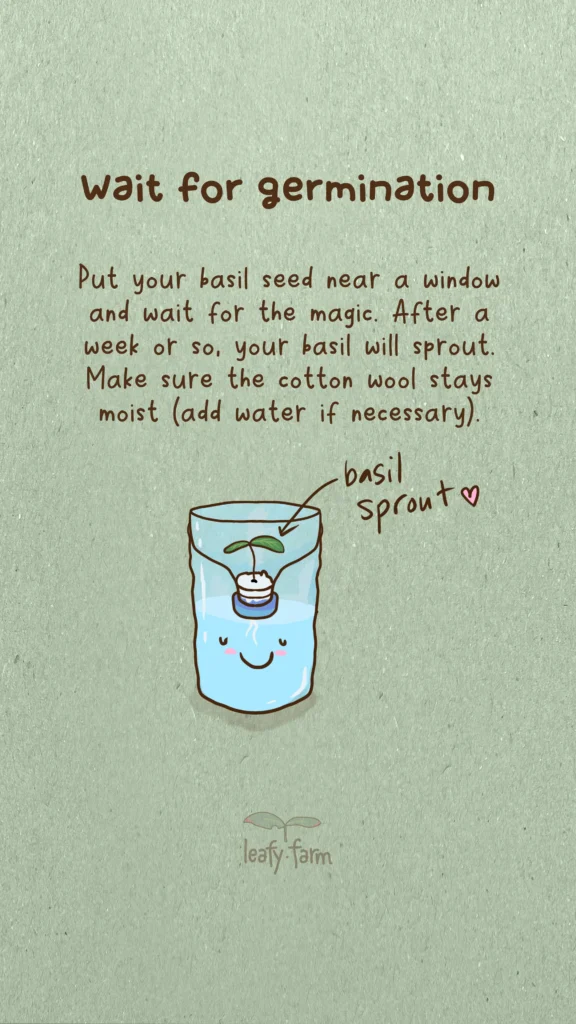
Wait for germination
Put your bottle near a window and wait for the magic. Make sure to keep the water level constant and after a week or so, your basil should germinate.
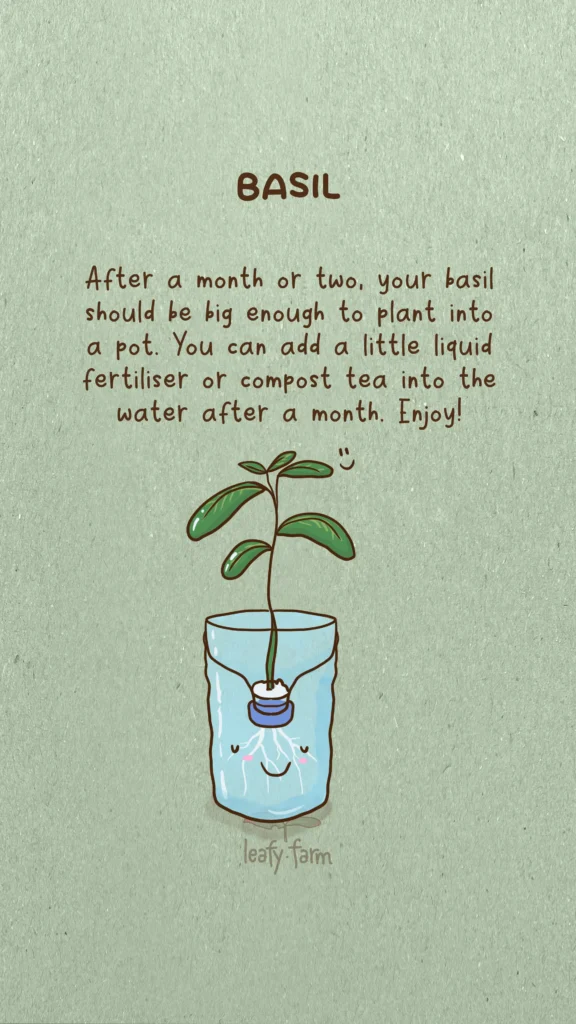
Plant it out
After a month, you should have a nice little seedling ready to be planted out into a pot. Add some compost tea to the water if you’d like to keep it in near the window. Enjoy!
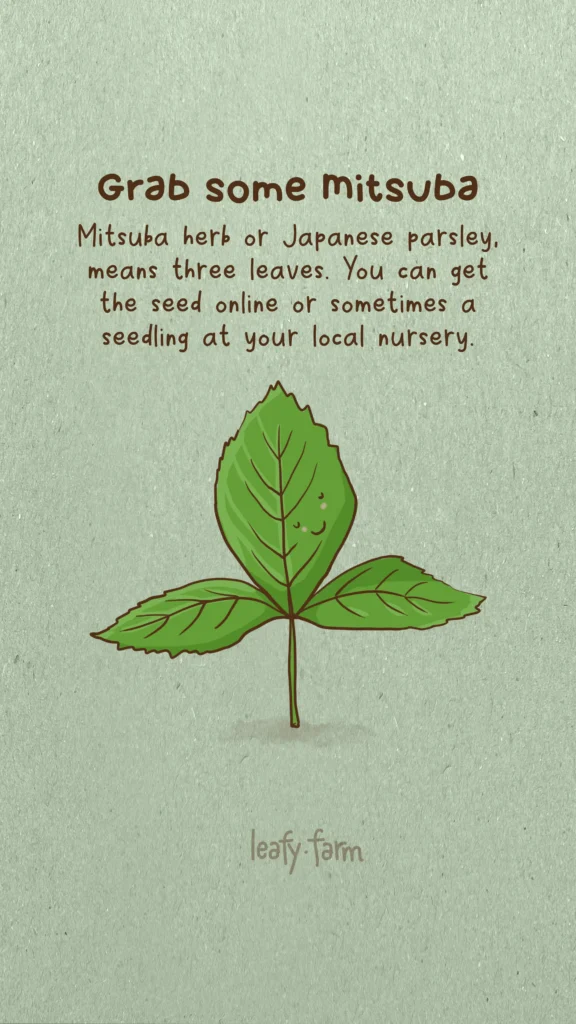
Mitsuba (三つ葉) is known by a few names and the most common would be Japanese parsley. It’s quite similar to parsley in size and appearance. Other names are wild parsley or Japanese hornwort.
The name
三つ葉 or Mitsu-ba literally means three objects + leaves (three leaves) or compound leaves with three leaflets. It is often spelt using Katakana in nurseries in Japan. The genus is Cryptotaenia and the species is Japonica. It’s a perennial and part of the celery family. I’ve had some plants live a couple years, but they do generally all dry up here in Australia due to the heat. But with a little care, you can keep it alive. Of course as they get older, their bitterness increases.
Varieties of mitsuba
There’s a white and and green variety in Japan but I’ve been used to the white variety from the Kansai region.
Growing locations and season
In Japan mistuba is grown in Shizuoka, Osaka and the east coast around Ibaraki, Chiba, Saitama and Aichi. It’s mainly grown hydroponically (green mitsuba) and harvested about 8 times over the year. There are cut leaf farms and also those that leave the root on the plant when presenting for sale. Peak demand in Japan is in December as it’s used for the new year celebrations.
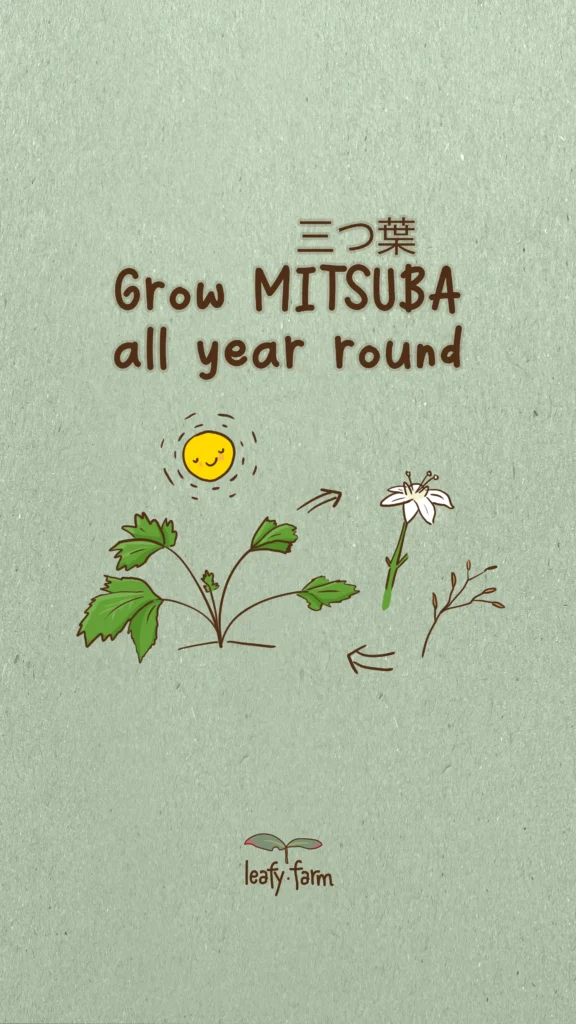
Seed will sprout here in Western Australia in April and plants are pretty much full size in May. It will grow to almost a meter or 3′ if you give it ideal conditions. In the northern hemisphere at home, it flowers in June-August. You can treat it similarly to parsley, let it go to seed and spread and you’ll have it popping up in the garden each year and staying for another season or so if it’s comfy.
The taste
It’s so unique and I love the tang. It’s got a lovely taste a little like coriander but not as powerful. It’s light, refreshing and can be slightly bitter depending on how it’s collected and prepared. The stems are used in soups in Japan and I love the contrast of the soft crunch of those against the kameboko and steamed vegetables often served with it.
It reminds me of Kyoto, cold winter nights and celebration, but with a subtle refined taste. It’s generally presented in such a minimalist way, so the flavour of the stem or leaves stand on their own. I have some memories of it being used in osumashi with tornado cooked egg or in donburi, that’s not a bad combination either.
Health benefits
The leaves have high levels of calcium, iron, potassium, beta-carotene and vitamin A and C.
Mitsuba’s scent
The scent of the plant contains cryptone (compound also found in eucalyptus and mint) and monoterpene which is said to increase appetite, assist with digestion, relaxation and promoting sleep. It contains other essential oils and monoterpenes such as α-pinene, sabinene, and β-pinene.
Possibly why this is served in osumashi at the beginning of traditional Japanese meals.
It’s beauty
I love seeing it pop up in the garden each year (see above, it’s hot here so they die off). The little sprouts come through and I get excited and give them extra care as I weed in between them. I move some to pots to ensure I have a safe supply. Sometimes they’ll get decimated by cabbage white butterfly caterpillars or snails.
They’re a hardy thing once established and love the water. They have pretty leaves, grow to a manageable size and the flowers are super cute.
It’s just one of those perennials that I allow to go free. It doesn’t take over the garden and it’s so useful in cooking. Plus it’s so easy to manage or just pull out.
The flowers
it has these delicate white flowers that bloom from the schizocarp fruits. They’re super cute as they start off tiny and bloom into basil-like flowers.
Gathering your mitsuba seed
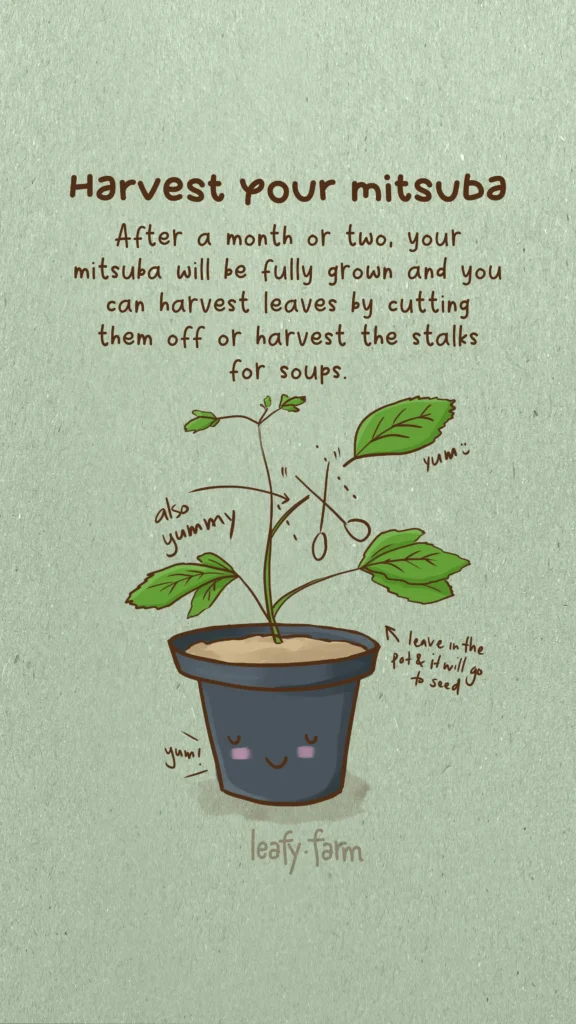
Once the seed has dried on the stalks, I cut the dried stalks off carefully with scissors and run my fingers down it to strip it of seeds and put them into a paper bag for storage. You don’t get too much extra plant material, it’s mainly seed by the time it’s dried.
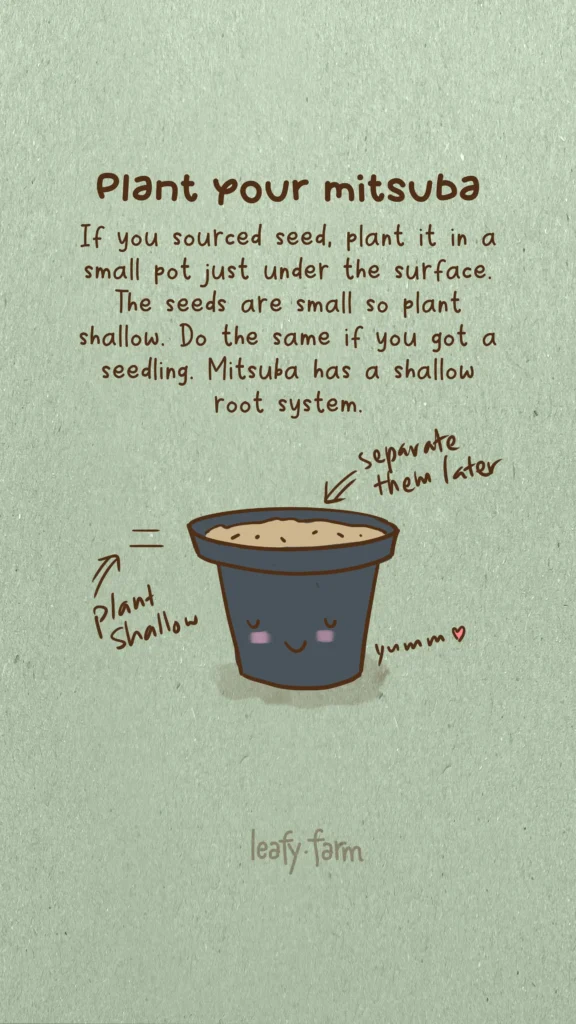
Plant your seed
Plant it into a pot, it doesn’t have to be big to start off. A small 0.5L or 17oz pot is enough to get it started.
Sunshine and climate
Mistuba likes full sun at times and if it’s really hot, part shade is and a cool, temperate climate. If you give it full sun, you might get the strong bitterness in the leaves.
Picking your mitsuba
Harvest the leaves, stalks or root depending on how you want to prepare it. I use the stalks and younger leaves in osumashi. Like parsley, you can just break stalks or leaves off and it will keep producing.
Eat your mitsuba
I had mitsuba often in Kyoto as they blanch the white stalks and add them with small leaves to a clear osumashi soup. I LOVE it and it’s the main reason I sourced seed to get it into the garden. Osuimono (お吸い物) translates to water thing and osumashi is a kind of osuimono. Osumashi generally has a simpler flavour and set of ingredients. Another fave was Japanese clear clam soup (あさりの潮汁), but we’ll talk about that in another blog.
Keeping it alive for next season
Take a cutting and root it in water inside the house. Keep it warm and regrow it like you might for basil. Or, another method is to germinate the seed inside on a silicone mat or in a small pot. It will grow during colder months if you provide warmth, like in the greenhouse.
You’ll have mitsuba all year round! Drop a comment if you found this useful!
Join me on Threads for more or subscribe at the bottom of the page for these posts in your email.
Shiso / しそ, also known as perilla, is a popular herb in Japan and Korea and known for its unique flavour and health benefits. While traditionally grown in Asia, it is possible to grow shiso year-round in Australia with a little TLC. Here are some tips to help you successfully grow the shiso herb in your Australian (or elsewhere) garden.
Getting started
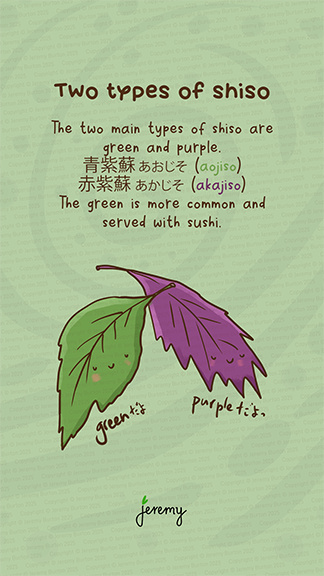
There are different varieties of shiso with the main two being aojiso (or green Shiso) and akajiso (red (aka) but it’s more purple). Its scientific name is Perilla frutescens var. crispa. You’re more likely to come across the green shiso as it’s by the far the most common.
The red shiso has a slightly different and more subtle taste, I’ve found when grown here in Aus. It was a lot stronger in flavour in Japan and used more for pickling and other things. Here are the kanji and wikipedia links for the two varieties:
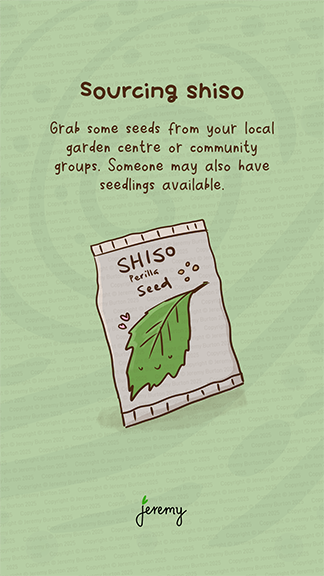
Your local gardening centre may stock some seed packets. Our local one in Perth stocks small packets that seem to be sourced from a Korean supplier. There are a handful of seed suppliers in Australia that also stock the purple when it’s in season. It’s unlikely you’ll find seedlings in your garden centre, it’s just not that popular yet.
Happy Valley Seeds have them online, green and red shiso or try amazon. Check your local Japanese or Korean communities or social pages, there’s likely someone selling small plants for a reasonable price. Do Bunnings sell shiso seeds? No they don’t. I can supply you seeds if you’re in Western Australia.
Germinating shiso seeds
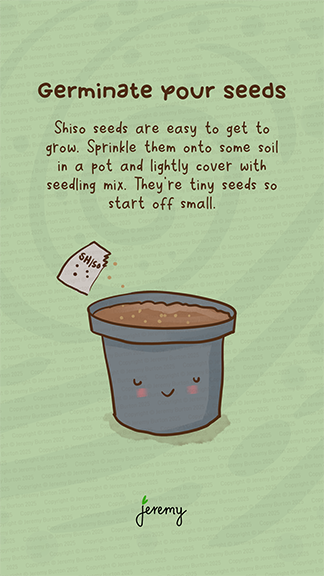
The seeds are tiny, less than a millimetre. Think poppy seed size. They’re quite hardy and long lasting though. I’ve stored some for many years and they germinated fine. Because they’re so small, they just need sprinkling across the top of the soil and a very light cover (if any) with seedling mix.
So them in spring – early summer as they germinate at around 20 degrees C (68 F). They will germinate in around 2-4 weeks. A light soak in water does seem to improve the germination rate, especially if the seeds have been stored for a while.
Watering the seed in will mix them enough with the top layer of soil so that you get a strong germination rate. I’ve found the green shiso germinates so much more consistently than the red. They can be germinated in seedling containers and also on silicone mats in a humid container / room using a light water spray or bath.
Once you get one plant to seed, you’ll have shiso for life. They’re as hardy as basil and if you leave them in the garden you’ll find shiso popping up all over the place.
Let’s talk about shade and light
Shiso plants require plenty of sunlight to grow and thrive. Make sure to plant them in a location that receives at least 6-8 hours of mild sunlight per day. The Australian summer sun is too harsh for these plants without a giving them a little TLC.
If you plan to have them out in the mid-summer sun, they need to be well established (well rooted mature plants), have a constant low level of moisture around the roots (deep pot) and some respite from the afternoon light.
I’ve had shiso survive out in the summer sun using the combination of environmental factors above. Those plants are still surviving today even though they got some crispy leaf edges. They didn’t receive full afternoon sun, I think that saved them.
From my experience, shiso grown under shade (verandah) will produce the best, lush and soft leaves. The harsh aussie sun hardens the leaves up and crisps the edges. They also grow smaller and have less flavour.
If you are growing shiso indoors, consider using grow lights to provide sufficient light for the plants.
Ensure good drainage
Shiso plants prefer well-draining soil to prevent water logging, which can lead to root rot. Add heaps of organic matter such as compost to improve soil drainage. Plant in raised beds or containers with drainage holes to ensure proper drainage.
They have a fine root system and so need a some sand to help with nutrient and water transfer. I found that a thin layer of moisture-holding mulch in the base of the pot or bed really helped make them resilient. So when you plant out, put in some mulch first, soil and mulch again.
Pests
Just like some other herbs, snails and slugs love a bit of shiso. You will likely need some kind of snail repellant. The main enemy however for us in Australia, is the cabbage white butterfly – or its caterpillar larvae. I’ve found that a net is necessary when the butterflies are breeding. It’s the easiest way to keep them away.
Ants also tend to like the sand around the root system.
Harvesting your shiso
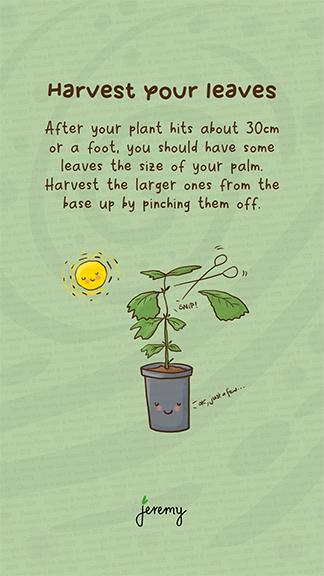
Harvesting needs to be done delicately. Shiso don’t get as woody as basil does and so pulling on the leaves too hard will uproot the plant. I use the method the pickers use in Japan because I don’t need a huge volume, and that is to pinch the leaves off with the thumb and forefinger nail. Scissors also make it easy!
Shiso plants benefit from leaf harvesting. You’ll notice as the plants get taller, the lower leaves will start to brown off and drop. They’re not receiving enough light and will not grow any bigger.
It’s best to regularly harvest from the base up, even if you don’t eat them. Pinch off any larger leaves and it will help reduce disease, provide more air flow and keep pests away.
Drying the leaves
Shiso leaves can be dried in the same way as many herbs. Just put them out to air dry, use the oven or dehydrator. I prefer to air dry them. I’ve tested the oven and even on a very low heat it takes a lot of the flavour away.
Dry them out till crunchy and then smash them up into a sealable jar. Shiso for life. You can sprinkle this into your meat dishes, salads, cocktails, drinks, ice cream – you name it. Think of it as the herb that sits between mint and basil.
Shiso oil
Using a distilling method (check out Shinagawa Distillery’s method. He uses lab equipment to distill flavours and oils from organic matter), you can extract the shiso oil quite easily. A very interesting process and something I want to test out at some point. I’d love to do this for citrus fruits.
Anyway, there is a lot of oil in shiso and it is commercially harvested and sold in bottles for cooking and other things, particularly so in Korea.
Shiso recipes
At this point I haven’t documented any shiso recipes on this blog, but will add them as we go. Try shiso gelato if you get a chance. I mix it with coconut, banana and a little honey, it’s sooo good in summer.
Shichimi – includes shiso
Shichimi is the Japanese word for a common mix of a seven spice used often in Japan.
Shichimi or nana-bro tougarashi is the name for the seven colour chilli mix – 七色唐辛子.
Shiso is one of the seven in the Shichimi mix, and it’s a great mix to try and make yourself if you can grow the set at home.
The other 6 may be (it’s chopped and changed) black and white sesame seed, chilli, ginger, sansho pepper, roasted orange peel, aonori, poppy seed and Kuzu peel. You can grab the S&B Togarashi online, S&B is one of the more popular brands.
Restart the grow process
Your shiso plants will go to seed if you don’t pinch the flower spikes off. So if you maintain the right conditions, white flowers will appear very similar to basil flowers. Let the flower spikes dry out and harvest the seed for planting again!
I’ll keep adding to this as I learn more.
Drop a comment below If this was useful for you or join me on Threads for more.